




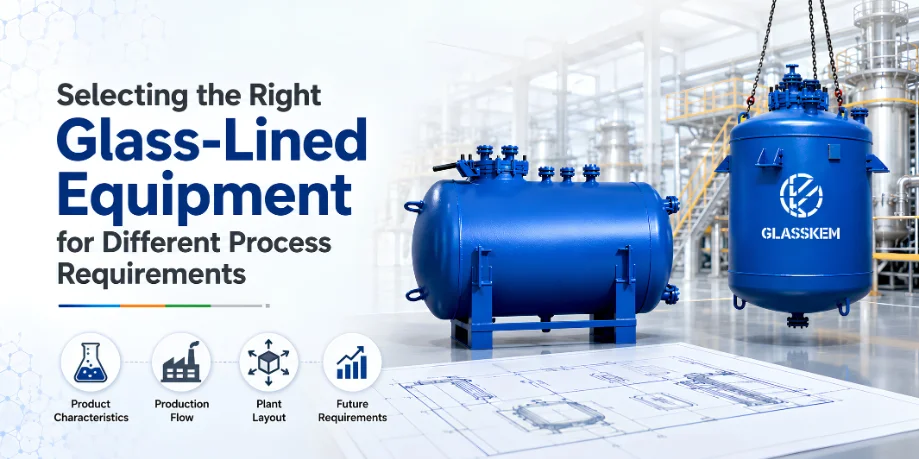
Storage equipment decisions often begin with a capacity number. Once the required volume is known, the natural instinct is to find a vessel large enough to hold it. In practice, however, capacity is only one part of the equation.
The same vessel that integrates smoothly into one process can create limitations in another. Material characteristics, production flow, available space, and future requirements all influence what type of containment system makes practical sense. Selecting Glass-Lined Storage Systems becomes much easier when the process itself drives the decision.
Understanding Process Requirements Before Selecting Equipment
Reliable containment starts with knowing exactly what the hardware will face on a daily basis. Long before anyone checks dimensions or accessory lists, production pacing has to be evaluated. The process itself must always dictate the equipment.
Production Volume Often Shapes Storage Requirements
Figuring out capacity isn't just about measuring maximum batch sizes. You need a realistic view of how material actually moves across the floor.
An oversized vessel wastes valuable footprint, while an undersized one guarantees daily bottlenecks. To properly match storage capacity with day-to-day production requirements, operations have to look at:
- Standard batch volumes relative to daily throughput.
- The time it takes for downstream equipment to become available.
- The actual need for intermediate storage between active phases.
Getting this balance right keeps materials moving. It stops you from leaving a batch stranded in a reactor just because the next process stage isn't ready.
Product Characteristics Influence Equipment Selection
The chemistry and physical state of the material naturally determine what kind of protection is necessary. Chemical Storage Tanks handle a lot more than just standard fluids. In many plants, media transitions between different physical states during processing. To handle this, containment systems must be highly adaptable, allowing facilities to safely hold liquids, powders, or granules.
Highly aggressive substances—like bromine, heavy caustics, or high-purity pharmaceuticals—leave no room for error. They require a completely non-reactive internal surface. Specialized Corrosion-Resistant Storage Vessels provide a strong barrier that stays stable across the entire pH spectrum. That stability guarantees neither the product nor the equipment degrades while the batch sits.
Plant Layout Often Determines Tank Configuration
A chemically compatible tank does no good if it won't fit inside the building. Available floor space and overhead clearance almost always dictate the final configuration.
If vertical clearance allows, a Glass-Lined Vertical Storage Tank maximizes containment volume while keeping the required footprint small. Depending on the installation environment, these vertical units can be equipped with different support structures, such as:
- Standard support legs
- Side brackets
- Skirt support designs
When overhead space is restricted, facilities typically move to a Glass-Lined Horizontal Tank. These single-piece units sit on sturdy saddles, which helps distribute the load safely and evenly across the plant floor.
Intermediate Holding Requirements Affect Equipment Choices
Materials rarely move straight from a reactor into a shipping container. Usually, the batch has to be staged securely while downstream equipment gets prepped.
Glass-Lined Receivers exist specifically to manage this operational gap. They handle the safe storage and transfer of raw materials, intermediates, and finished products between active production steps.
When evaluating Storage Tanks & Receivers, operations need to pin down exactly how long these intermediate holding periods will last. Plant managers also have to determine how the batch will be moved without compromising the level of chemical protection maintained throughout the process.
Planning for Future Requirements Helps Avoid Early Limitations
Production volumes scale up. New products hit the line. Operating parameters shift. Sizing a setup strictly for today's volume solves the immediate problem, but it easily creates operational bottlenecks later.
Facilities planning for growth frequently skip standard dimensions and opt for custom-built tanks tailored to their evolving specs. Looking at available capacities ranging from 63 L up to 20,000 L allows operations to build genuine flexibility into their expansion plans.
Facilities expanding across Canada tend to look for configurations that can absorb changing production demands without requiring major retrofits. We see this exact priority in growing industrial regions like Alberta, where plants often need to add storage and transfer capacity without disrupting their existing layout.
Anticipating these variables naturally leads to the next step: adapting containment infrastructure to growing process demands.
Similar Principles Apply Across Process Equipment
The questions you ask when picking a holding vessel are fundamentally the same ones you should ask when looking at active process equipment. Whether managing static storage or active reactions, the hardware must align with day-to-day production requirements.
For a closer look at how these principles impact the reaction phase, review How Process Requirements Influence Glass-Lined Reactor Selection.
Pinning down these variables is precisely What to Evaluate Before Purchasing a Glass-Lined Reactor. It ensures every piece of infrastructure on the floor works together to support daily production goals.
Picking the right containment environment ultimately comes down to understanding your own workflow. Carefully evaluating capacity needs, product behavior, and spatial constraints allows facilities to secure infrastructure that prevents bottlenecks and protects product integrity for the long haul.
Contact Us to discuss the exact dimensions and operating parameters your production environment demands