




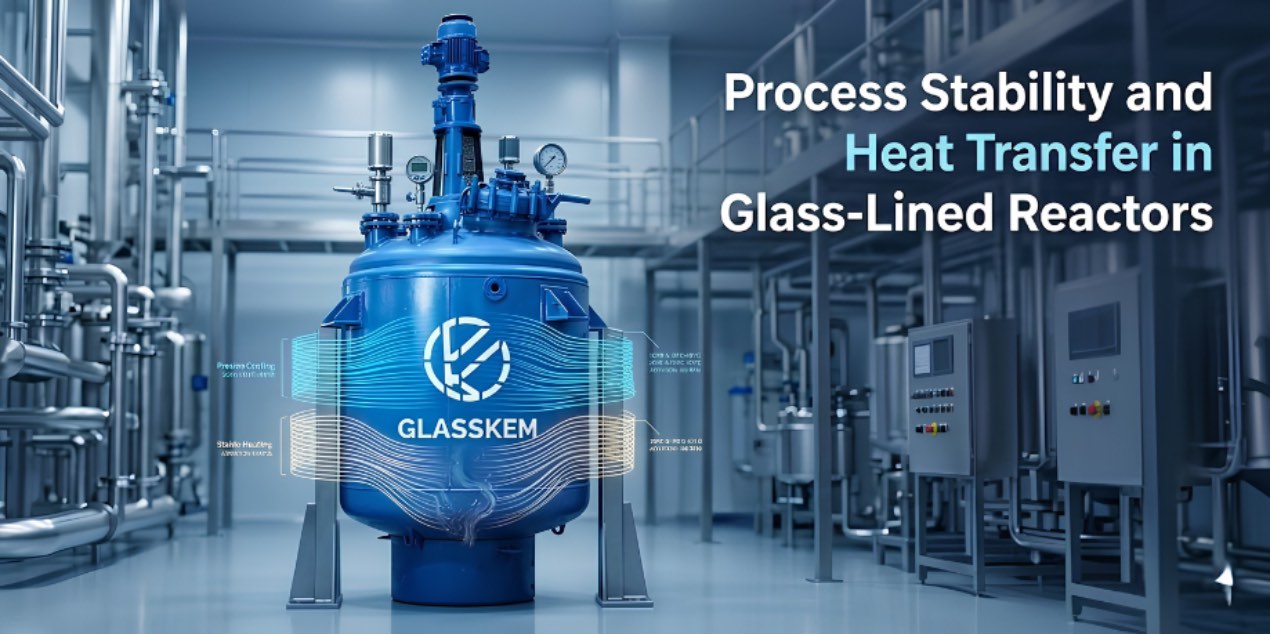
When a vessel moves into a long production campaign, the operational focus usually shifts. Surviving harsh chemicals is just the expected baseline. On the plant floor, the actual challenge is maintaining stable processing conditions while thermal and mechanical loads fluctuate. PFG Glasskem engineers equipment that pairs the mechanical strength of steel with the chemical resistance of glass to support this exact level of process continuity.
Maintaining Consistent Reaction Environments on the Plant Floor
Once a reactor is operating under sustained pressure, preventing internal temperature fluctuations becomes the priority. Uneven mixing or poor heat distribution can easily affect batch consistency during production. During extended production runs, maintaining consistent heat transfer in glass lined reactors becomes the foundation for predictable batch output.
How Agitation Drives Thermal Uniformity
Getting the temperature right in the jacket doesn't mean much if the heat isn't moving effectively through the batch. Agitation is what actually distributes that thermal energy. If the mixing speed or blade type doesn't match the process media, uneven process conditions can begin developing inside the vessel.
For lighter liquid batches, standard impeller agitators keep the fluid moving smoothly. But as the batch gets thicker, standard impellers sometimes struggle to maintain process stability in glass lined reactors.
Managing Viscous Materials and Wall Buildup
Thick, paste-like materials behave differently as they heat up or cool down. They tend to cling to the inner surfaces of the vessel. When highly viscous media builds up on the wall, it creates an insulating layer that interferes with heat transfer.
Anchor agitators provide a more suitable mixing arrangement for this issue. Their blades sweep closely along the glass walls, pulling material away from the edges to support uniform heat transfer and prevent wall buildup. Facilities evaluating an industrial reactor supplier Ohio often look specifically at these anchor setups to manage thick chemical runs. Selecting the right Glass-Lined Reactor agitation configuration supports more stable operation of the gearbox-driven shaft during processing.
The Impact of Baffles on Fluid Flow
Sometimes you need to deliberately interrupt the fluid dynamics inside the tank. Without baffles, liquids can begin rotating with the agitator instead of circulating through the vessel.
Baffles provide that necessary flow disturbance. Some setups rely on simple paddle-type flange baffles, while others integrate multifunction baffles that handle flow disruption and house temperature measurement tools in one piece. Getting accurate temperature readings without compromising the main glass barrier is a big part of keeping the run stable over time.
Regulating Heat Through Jacket Systems
Heat regulation relies heavily on the external jacket. Depending on how fast the batch needs to heat or cool, operations might use a conventional jacket with agitating nozzles to circulate the fluid.
For processes that require highly controlled or zoned heating, a half-pipe coil jacket is often preferred. Buyers consulting a reactor supplier California usually prioritize these precise heating and cooling capabilities. This becomes especially noticeable when working with temperature-sensitive pharmaceutical ingredients that require cryogenic processing down to -80°C.
Continuous Operation Under Demanding Conditions
Extended campaigns put constant stress on the equipment. Standard mild steel units typically operate within -25°C and +200°C , while stainless steel configurations can handle extreme lows down to -80°C. Both options are built to manage internal pressures ranging from full vacuum up to +6 bar.
Staying within these operating limits protects the glass lining from sudden thermal shock. Plant managers working with a glass lined reactor manufacturer Texas often focus on avoiding sudden temperature spikes to help keep the lining intact over years of continuous petrochemical processing. Glass lined reactors handle the aggressive chemicals, but it is the careful management of temperature and pressure that keeps the process stable.
Operational Setup and Final Considerations
Production doesn't just stop at the end of the reaction. Getting the product out cleanly affects how quickly the next run can start. Flush bottom valve assemblies allow for smoother discharge, meaning fewer residues are left behind to interfere with the next cycle's heat transfer.
Aligning your agitation and heating systems with your specific batch requirements makes daily operation much more predictable. Working with a knowledgeable glass lined reactor supplier USA helps configure the equipment to match the actual realities of the plant floor.
If you're reviewing process equipment needs for a facility upgrade or new production line, Contact Us to review suitable reactor configurations for your process requirements.